Practical Snack Ideas and How to Plan Them
Snacks are a normal part of eating. A good snack can give you energy when meals are far apart and add foods like fruit, vegetables, nuts or yogurt to your day.
Snacks tend to work best when they are planned rather than grabbed on the run. This guide covers when snacks help, how to build ones that keep you satisfied, and plenty of simple ideas to try.
Sources checked
4 min read
When snacks help
Harvard T.H. Chan School of Public Health notes that snacks can provide an energy boost when several hours pass between meals and can help curb hunger so you are less likely to overeat at your next meal. Snacks can also be a chance to add nutritious foods, such as fresh fruit or nuts.
Harvard also points out the other side: frequent or large snacks can add up, and very frequent snacking can make it harder to feel hungry for meals. The goal is not to avoid snacks, but to make them work for you.
Plan your snacks
Harvard suggests thinking about snacks in four simple questions:
- When? Notice the times of day you usually get hungry between meals, such as mid-afternoon or after work.
- Why? Check whether you are physically hungry or reacting to boredom, stress or another feeling.
- What? Choose something you will find satisfying and enjoyable.
- How much? Decide on an amount ahead of time, especially with foods that are easy to keep eating.
Writing down when you snack for a few days can reveal patterns. A notebook or notes app is one simple, judgment-free way to do this.
Pair foods for staying power
According to Harvard, snacks made from whole foods that contain protein, fiber and whole grains tend to be more satisfying. A simple way to put this into practice is to pair two foods: one with protein and one with fiber, such as a fruit, vegetable or whole grain.
- Apple slices with a spoonful of nut butter
- Carrot and cucumber sticks with hummus
- Plain yogurt with berries
- Whole-grain crackers with a slice of cheese
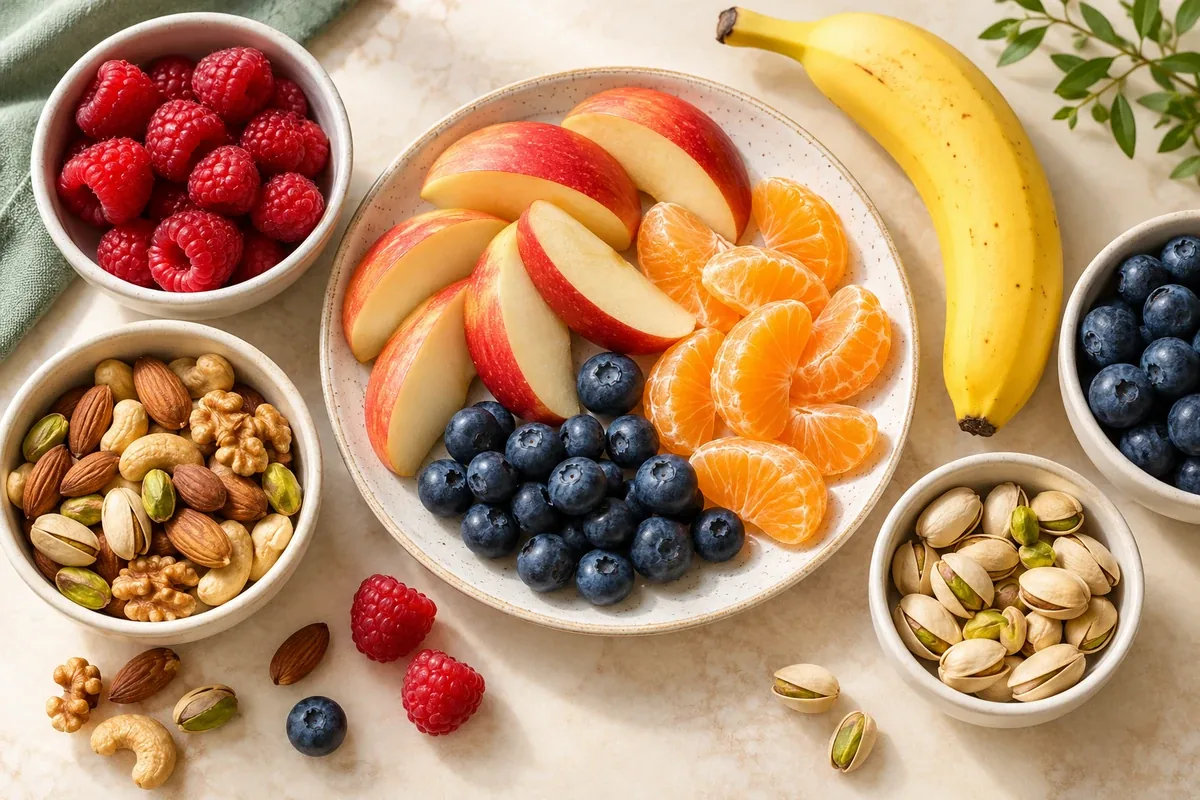
- A small handful of nuts with a piece of fruit
- Cottage cheese with chopped fruit
- A boiled egg with cherry tomatoes
Need a ready-made option? Try a hummus veggie snack box or a Greek yogurt parfait.
Snack ideas by craving
Sometimes you want something specific. Harvard groups snack ideas by texture and flavor, which makes it easier to find something that hits the spot:
Crunchy
Raw vegetable sticks, an apple, nuts, seeds, whole-grain crackers or roasted chickpeas.
Creamy
Yogurt, cottage cheese, hummus or avocado.
Sweet
Chopped fresh fruit, or a small piece of dark chocolate with some berries.
Savory
A cheese cube or slice, roasted chickpeas, or nut butter on whole-grain toast.
Snacks for busy days
The snacks that are easiest to grab are the ones you end up eating. A little preparation keeps good options close by when you are out, at work or running errands:
- Keep a piece of whole fruit, like an apple, banana or orange, in your bag.
- Pack a small container of nuts or seeds for the car or your desk.
- Bring a pre-portioned container of yogurt or cottage cheese in an insulated lunch bag with an ice pack.
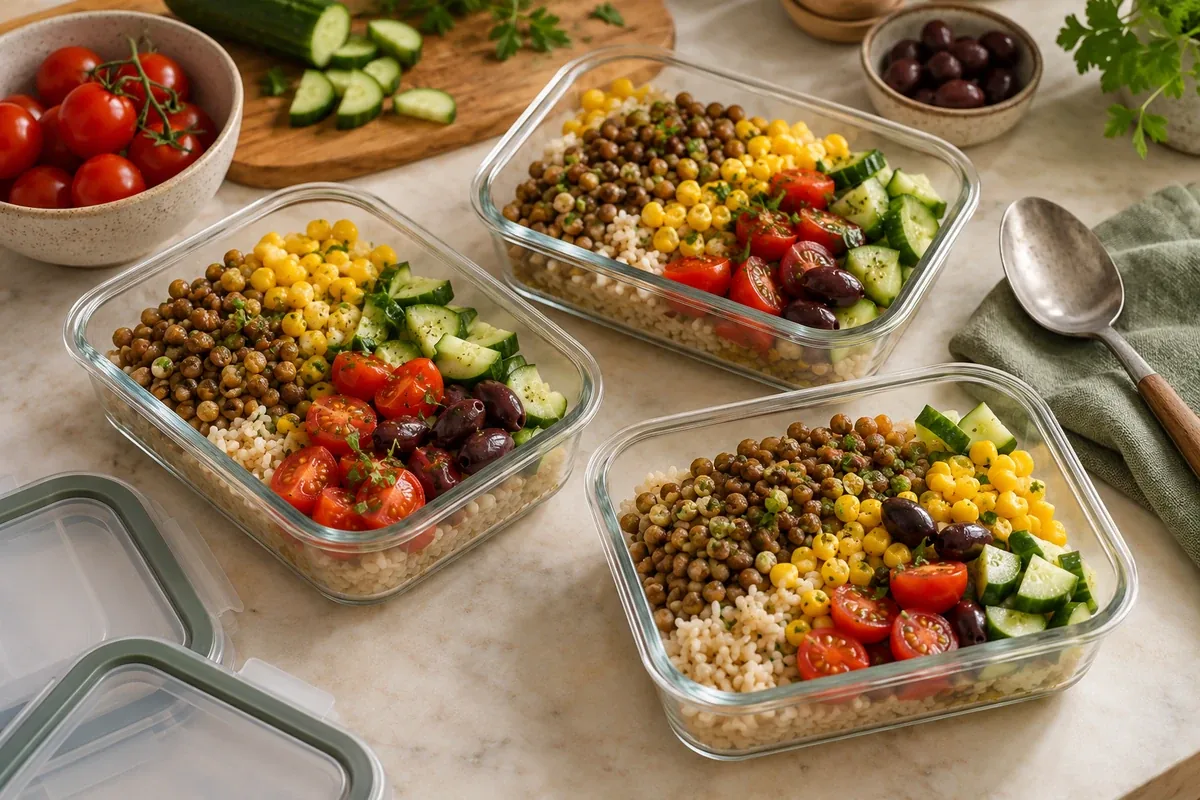
- Prepare a few snack boxes at the start of the week with cut vegetables, hummus and whole-grain crackers.
If you already set aside time to meal prep, add snacks to the list. Washing a few pieces of fruit and portioning nuts takes only a few extra minutes.
Portion snacks ahead
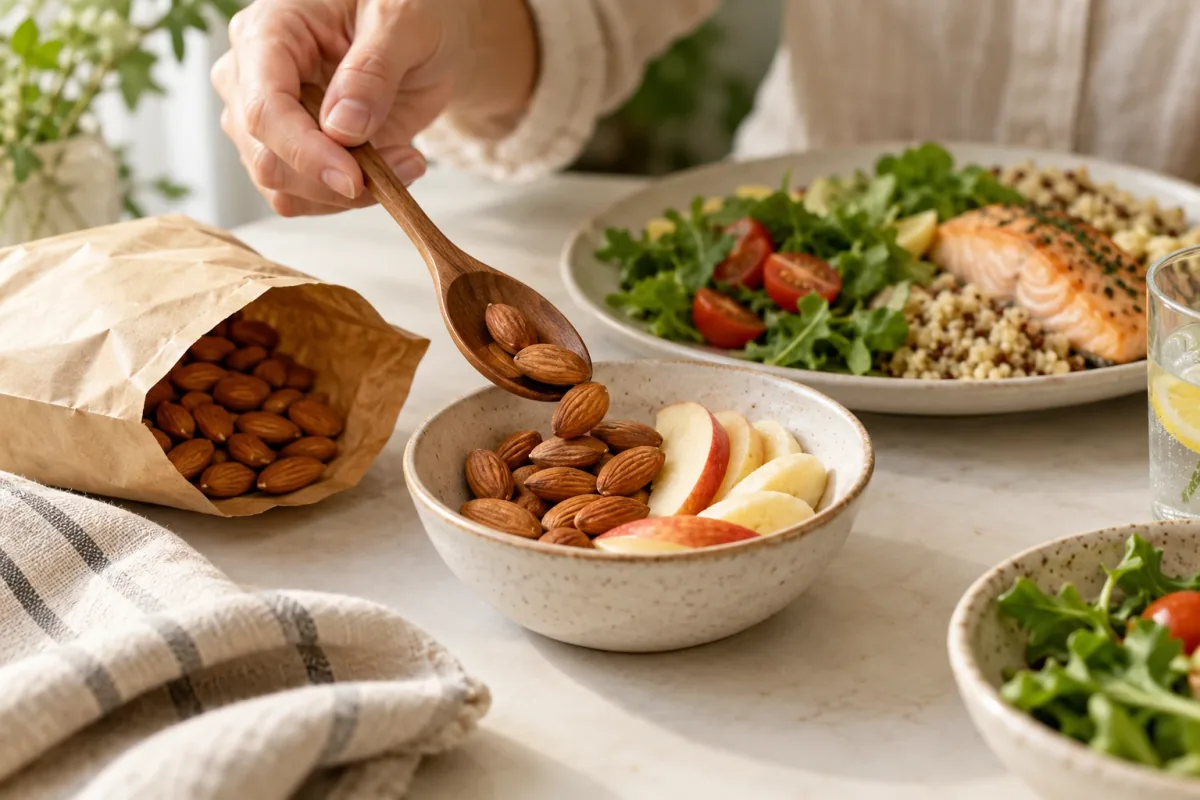
Snacks like nuts, crackers, chips and dried fruit are easy to keep eating straight from the bag. Harvard notes that packaged snacks often contain multiple servings, so the Nutrition Facts label is a helpful guide. The CDC and NIDDK both suggest putting snacks into a bowl or container instead of eating from the package.
- Divide large bags of nuts or crackers into small containers soon after you buy them.
- Wash and chop vegetables when you get home from the store so they are ready to grab.
- Pack a snack with your lunch so you are not relying on vending machines.
- Serve yourself one portion, then put the package away.
For more on servings and portions, read understanding portion sizes and how to read food labels.
Set up your space
What you see is often what you reach for. The CDC suggests keeping nutritious snacks at home or work, storing healthier options at eye level and in front, and keeping less nutritious snacks out of sight, such as on a high shelf.
- Keep a bowl of fruit on the counter or desk.
- Store cut vegetables and hummus at the front of the fridge.
- Keep shelf-stable options like nuts, canned fruit without added sugar and whole-grain crackers in a bag or drawer at work.
About this article
General education for adults, based on the sources listed below. This article has not been medically reviewed.
This information is educational and is not a substitute for advice from your doctor or a registered dietitian. Read our health disclaimer and editorial policy. Spotted an error? Tell us.
Sources
Harvard T.H. Chan School of Public Health, The Nutrition Source — The Science of Snacking. Checked Oct 13, 2026.
Centers for Disease Control and Prevention (CDC) — How to Have Healthier Meals and Snacks. Checked Oct 13, 2026.
National Institute of Diabetes and Digestive and Kidney Diseases (NIDDK) — Food Portions: Choosing Just Enough for You. Checked Oct 13, 2026.