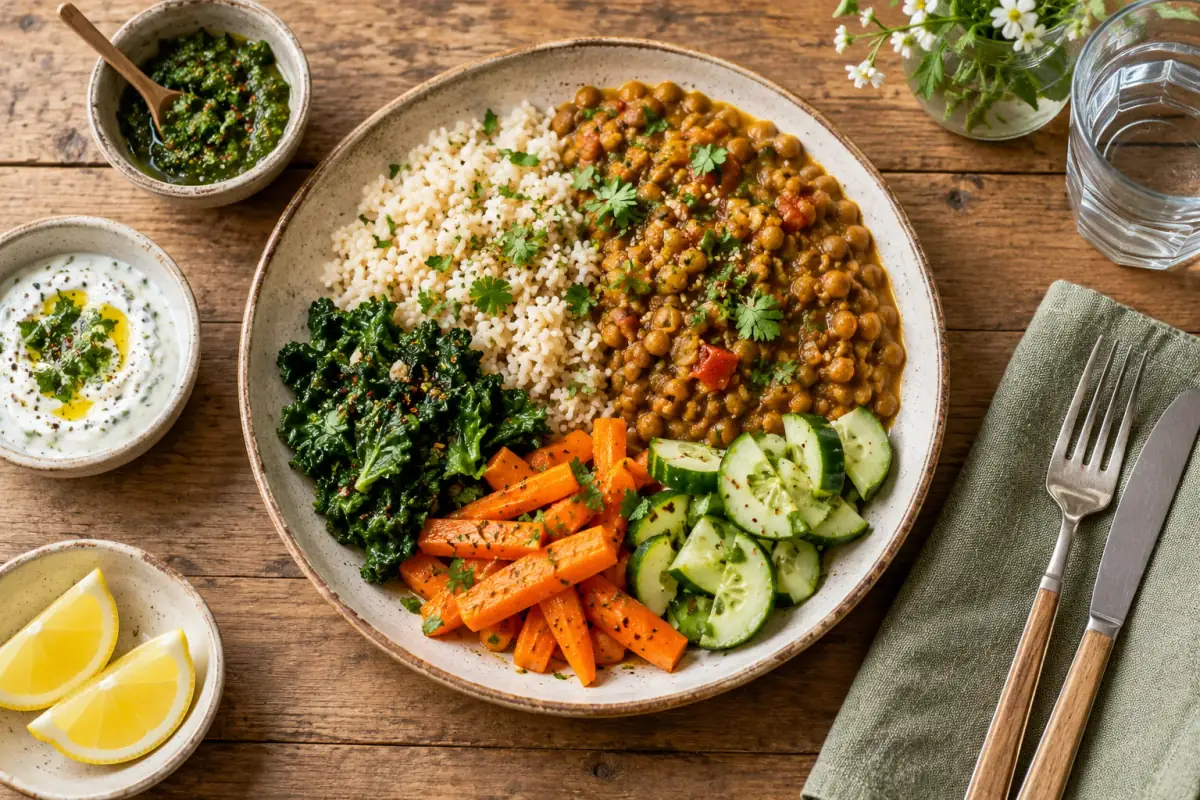
Understanding Portions Without Weighing Every Meal
Understanding portion sizes does not require turning every meal into a laboratory exercise. The first useful distinction is between the amount you choose to eat and the reference amount shown on a food label.
A portion is what you serve or consume. A labeled serving is the amount used to describe nutrition information. They can be different, and a serving size is not automatically a personal recommendation.[1]
Sources checked
2 min read
Start with awareness rather than a rule
Choose one familiar meal and notice how you usually serve it. Do you eat directly from a package, share dishes at the table, or receive a fixed restaurant portion? Each setting makes the amount easier or harder to judge.
You do not need to label the meal as good or bad. The goal is to understand what is happening so you can make an informed choice.
Use the label as a reference
If the package lists information for a certain amount, compare that amount with what you intend to eat. A container can hold more than one serving.
This comparison explains the label; it does not tell you exactly how much your body needs. For detailed label reading, see how to read food labels.
Try practical serving choices
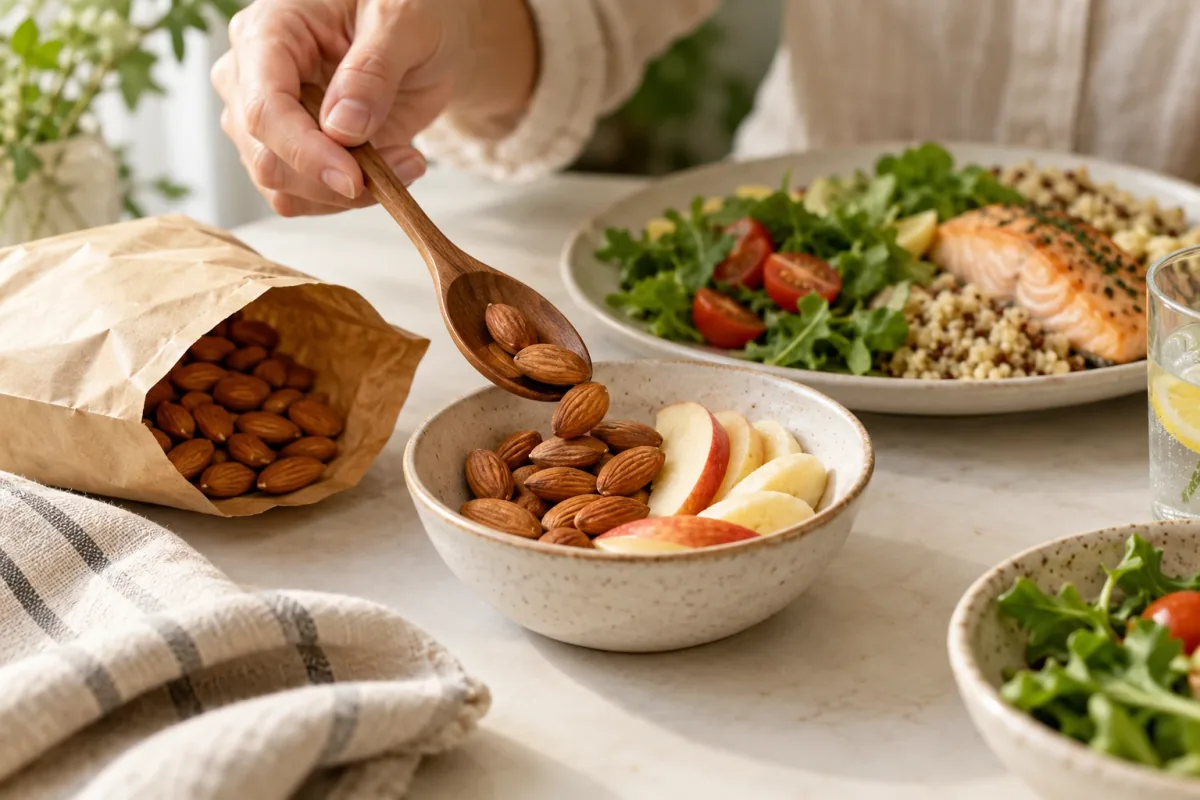
You might put a snack in a bowl rather than eat from a large package, serve a meal on a plate before sitting down, or decide whether to save part of a restaurant meal. These are options for making the amount visible, not mandatory tricks to suppress hunger.
After an initial serving, pause if it helps you decide whether you want more. You are allowed to respond to hunger. A portion-awareness routine should not become a contest to eat as little as possible.
Account for different needs
Someone else’s portion is not a reliable prescription for you. Activity, health, medications, appetite, and the wider eating pattern can affect what is appropriate. Medical conditions may also require tailored guidance.
If you need a structured portion plan, ask a registered dietitian to help adapt it to familiar foods. Bring examples of meals you actually eat rather than trying to recreate a generic illustration.
Use measuring selectively, if useful
A measuring cup can sometimes clarify what a label means. That does not mean you must measure every meal forever. Choose a method that improves understanding without creating anxiety or excessive effort.
If portion tracking leads to fear of food or restrictive behavior, stop and seek qualified guidance. A tool should support health rather than make eating increasingly difficult.
Common questions
Is a package serving the right portion for everyone?
No. It is a reference for the nutrition information, not an individual meal prescription.
Can portion awareness help me lose weight fast?
It can help you understand intake, but it does not guarantee a rate of weight loss. Use the beginner’s guide for the broader context and a notebook or notes app for optional nonjudgmental notes.
About this article
General education for adults, based on the sources listed below. This article has not been medically reviewed.
This information is educational and is not a substitute for advice from your doctor or a registered dietitian. Read our health disclaimer and editorial policy. Spotted an error? Tell us.
Sources
NIDDK — Food Portions: Choosing Just Enough for You. Checked Oct 15, 2026.
Sources checked on October 15, 2026. Numbered references support the factual statements marked in the text. Practical scenarios and planning templates are original examples, not clinical study results.