Meal Prep Basics: A Simple Weekly Routine
Busy days are when good intentions about food tend to slip. Meal prep helps by doing some of the work ahead of time, so a balanced meal is ready when you are tired or short on time.
Meal prep does not have to mean a whole Sunday spent cooking or matching containers for every meal. Harvard T.H. Chan School of Public Health notes there is no one correct method. This guide offers a simple starting routine and the food safety basics that keep prepared food safe to eat.
Sources checked
4 min read
Why meal prep helps
When food is already prepared, the easiest choice and the healthier choice are more often the same thing. The CDC notes that planning meals to cook at home can help you avoid less healthy drive-thru meals. Prepping can also save money and reduce food waste, because you use what you buy.
- Fewer daily decisions about what to eat
- Less time spent cooking on busy weeknights
- Easier to include vegetables, whole grains and protein at each meal
- Less food going to waste
A simple weekly routine
Harvard's meal prep guide suggests choosing one day a week to plan menus, write a grocery list, shop and do most of the cooking. Here is one way to break that down:
- Plan a few meals. Start small. Harvard suggests aiming for enough dinners for two or three days of the week. Map them out on paper or in a notes app.
- Make a list. Check what you already have, then write a grocery list for the rest.
- Cook the slow things first. Harvard suggests focusing first on foods that take the longest, such as proteins, whole grains, dried beans and roasted vegetables.
- Prep ingredients while things cook. Wash greens, chop vegetables and fruit, boil eggs or cook a pot of beans.
- Pack and label. Divide food into containers, label them with the date, and put the oldest items at the front of the fridge.
What to prep
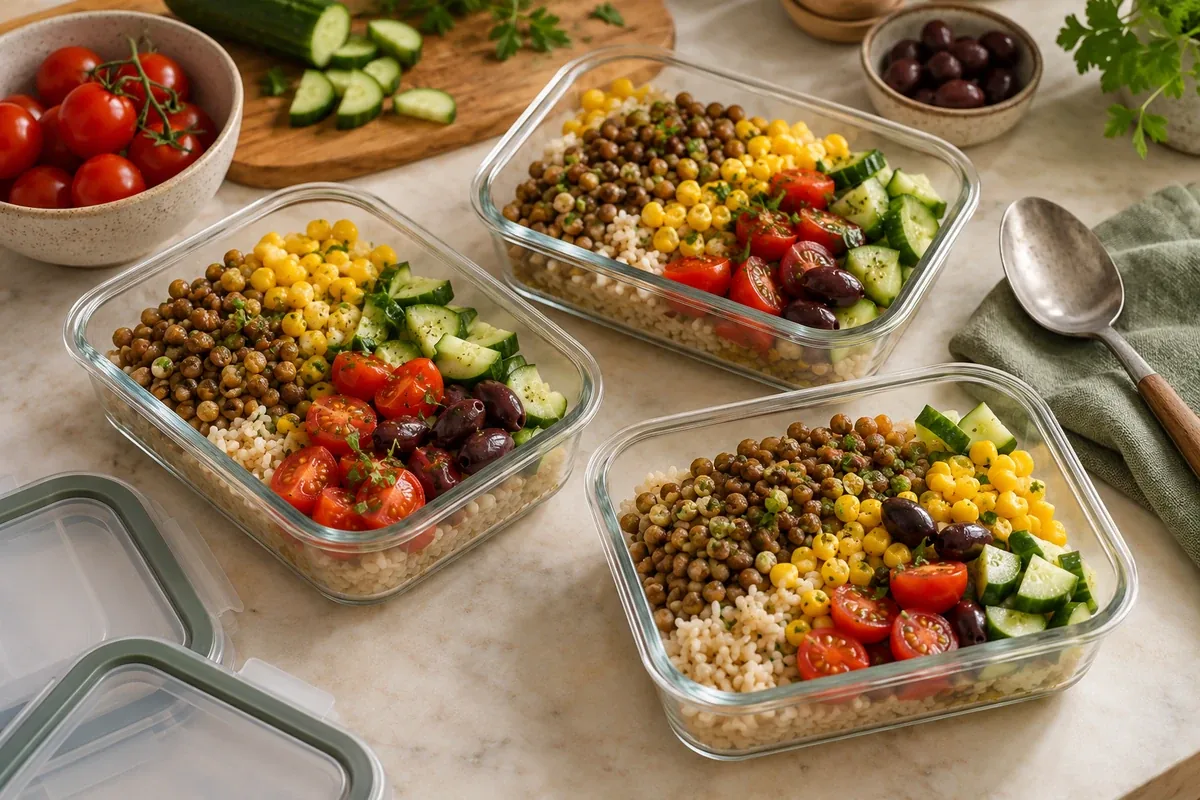
You do not need to prepare full meals. Prepping a few building blocks gives you flexibility to mix and match through the week. Think in terms of a balanced plate:
- Vegetables: a tray of roasted vegetables, washed salad greens, chopped raw vegetables for snacking
- Whole grains: a pot of brown rice, quinoa or another grain you like
- Protein: baked chicken, boiled eggs, cooked lentils or beans, baked tofu
- Extras: a simple dressing or sauce to tie it all together
Recipes that work well for prep include sheet-pan chicken and vegetables, lentil vegetable soup, chickpea quinoa salad and overnight oats with berries for quick breakfasts.
Food safety for prepared food and leftovers
Prepared food needs to be handled safely so it is still good to eat later in the week. These basics come from the CDC, FDA and USDA:
- Refrigerate promptly. Put cooked food in the fridge within 2 hours, or within 1 hour if it has been somewhere hotter than 90°F, such as a hot car or a picnic.
- Cool food quickly. The USDA recommends dividing large amounts into shallow containers so food cools faster in the fridge.
- Keep your fridge cold. The fridge should be at 40°F or below and the freezer at 0°F. An appliance thermometer can help you check.
- Use leftovers within 3 to 4 days. The USDA advises using most cooked leftovers within 3 to 4 days, or freezing them for longer storage.
- Reheat to 165°F. Use a food thermometer to check that reheated leftovers reach 165°F.
- Thaw safely. Thaw frozen food in the fridge, in cold water or in the microwave, not on the counter.
According to the FDA, food kept frozen at 0°F stays safe indefinitely, though its quality can decline over time. Freezing stops bacteria from growing but does not kill most of them, so safe handling still matters after thawing.
Keep it sustainable
The best meal prep routine is one you can keep doing. If a big prep session feels like too much, try a smaller version:
- Cook a double batch of one dinner and save the extra for lunch.
- Prep only breakfasts or only lunches for the week.
- Spend 20 minutes washing and chopping produce after shopping.
- Keep a few frozen vegetables and canned beans on hand for backup meals.
Some weeks will not go to plan, and that is okay. Read getting back on track after a busy week for ideas, and see building consistent habits for ways to make routines stick. If you have a medical condition that affects what you eat, a registered dietitian can help you build a prep plan that fits.
About this article
General education for adults, based on the sources listed below. This article has not been medically reviewed.
This information is educational and is not a substitute for advice from your doctor or a registered dietitian. Read our health disclaimer and editorial policy. Spotted an error? Tell us.
Sources
Harvard T.H. Chan School of Public Health, The Nutrition Source — Meal Prep Guide. Checked Oct 13, 2026.
U.S. Department of Agriculture, Food Safety and Inspection Service (USDA FSIS) — Leftovers and Food Safety. Checked Oct 13, 2026.
Centers for Disease Control and Prevention (CDC) — Preventing Food Poisoning. Checked Oct 13, 2026.
U.S. Food and Drug Administration (FDA) — Are You Storing Food Safely?. Checked Oct 13, 2026.
Centers for Disease Control and Prevention (CDC) — How to Have Healthier Meals and Snacks. Checked Oct 13, 2026.