How to Move More Every Day (Without a Gym)
When people think about getting more active, they often picture a gym membership, running shoes and an hour-long workout. Those can be great, but they are not the only way to move. A lot of helpful activity happens in ordinary moments: walking to the mailbox, taking the stairs, standing up during a phone call or carrying groceries in from the car.
This guide covers what health experts recommend for adults, why breaking up long stretches of sitting matters, and practical ideas for fitting more movement into a normal, busy day. The goal is not perfection. It is simply to move a little more than you did before.
Sources checked
5 min read

What the guidelines recommend
The Physical Activity Guidelines for Americans are the main U.S. recommendations for how much activity people need. For adults, they recommend:
- At least 150 minutes a week of moderate-intensity aerobic activity, such as brisk walking. Spread over the week, that could look like 30 minutes a day on 5 days.
- Or 75 minutes a week of vigorous-intensity activity, such as jogging, or an equal mix of moderate and vigorous activity.
- Muscle-strengthening activities on at least 2 days a week that work all the major muscle groups (legs, hips, back, abdomen, chest, shoulders and arms).
Those numbers can feel like a lot if you are starting from very little. The good news is that the same guidelines are clear that some physical activity is better than none. Any amount of activity has some health benefits, and you can spread your activity across the week in smaller chunks of time.
Why sitting less matters
Many of us spend long stretches sitting at a desk, in the car or on the couch. Health guidance from both the U.S. and the UK encourages adults to move more and sit less. The UK NHS guidelines put it simply: reduce time spent sitting or lying down, and break up long periods of not moving with some activity.
The World Health Organization also recommends that people of all ages limit the amount of time they spend being sedentary. You do not need to stop sitting altogether. The idea is to notice long, unbroken stretches of stillness and add movement in between.
Small activity breaks you can try today
Here are simple ideas that fit into a regular day. Pick one or two that feel easy, rather than trying them all at once.
At home
- Walk around while you talk on the phone.
- Stand up and stretch during TV ad breaks or between episodes.
- Do a few minutes of tidying, gardening or sweeping.
- Take two trips to carry laundry or groceries instead of one.
At work
- Set a gentle reminder to stand up and move every so often.
- Walk over to talk to a coworker instead of sending a message.
- Use a restroom, printer or water station that is a little farther away.
- Suggest a walking meeting for one-on-one conversations.
Out and about
- Take the stairs for a floor or two when it is safe and comfortable.
- Park a bit farther from the entrance.
- Get off public transport one stop early and walk the rest of the way.
- Walk to nearby shops or errands when you can.
Building toward the weekly guidelines
Once small breaks start to feel normal, you can gradually add more purposeful activity. Walking is one of the easiest places to start because it needs no special equipment. Our beginner walking guide explains how to start and build up at a comfortable pace, and a simple calendar can help you map out your week.
- Start where you are. If you currently walk 5 minutes a day, aim for 7 or 10, not 45.
- Spread it out. Several shorter sessions count. A 10-minute walk after lunch and another after dinner both add to your weekly total.
- Add strength work slowly. Muscle-strengthening activity can be simple: bodyweight moves like sit-to-stands from a chair, wall push-ups, or carrying heavy shopping bags.
- Increase gradually. When something feels easy, add a few minutes or one more day, rather than doubling it.
Making movement a habit
The hardest part of moving more is often remembering to do it. Linking movement to something you already do every day can help. For example, "after I pour my morning coffee, I walk around the house for two minutes," or "after I park at work, I take the long way to the entrance."
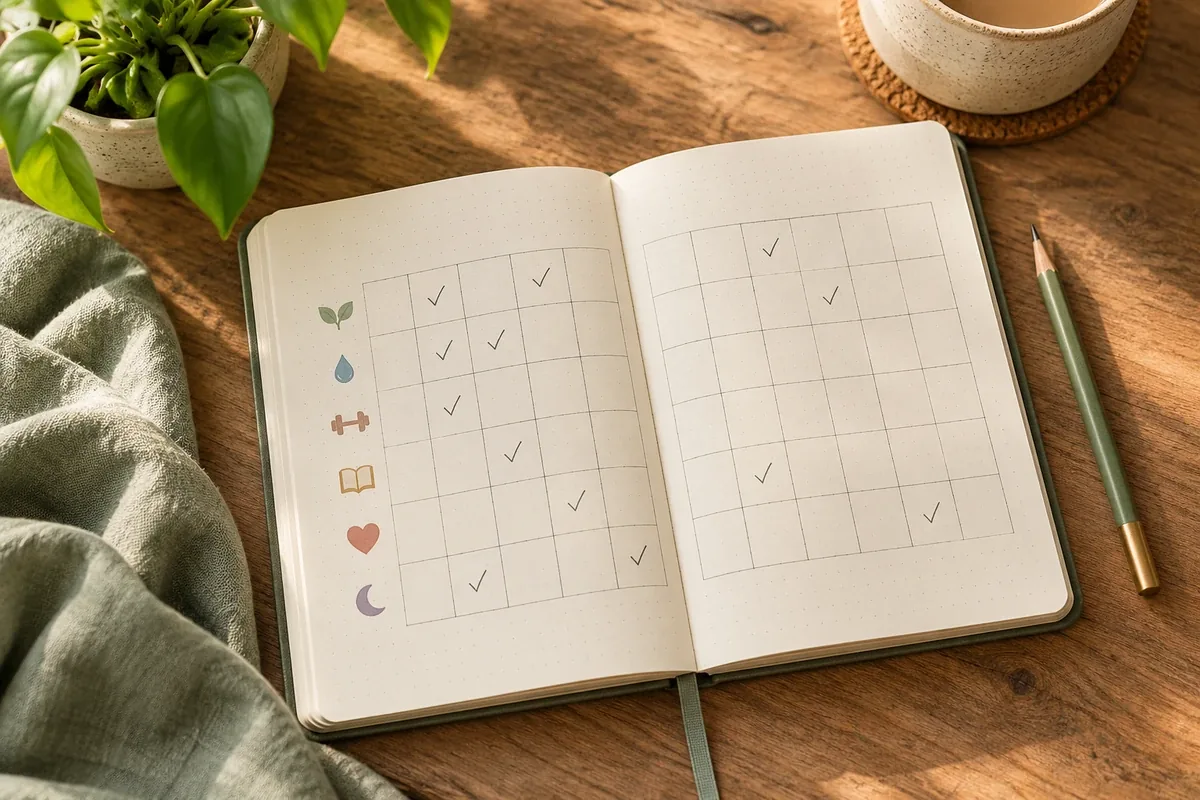
Tracking can also make your progress easier to see. A simple checkmark on a calendar or in a notebook each day you take a movement break can be surprisingly motivating. For more ideas on making changes last, read building consistent habits.
- Choose activities you actually enjoy, such as dancing in the kitchen, walking with a friend or playing with kids or pets.
- Keep comfortable shoes near the door so a quick walk is easy to start.
- Be flexible. On busy or low-energy days, a two-minute stretch still counts.
Listening to your body
Moving more should feel manageable. Feeling some effort is expected when you are getting used to new activity, but if you do not feel right, stop. Chest pain, extreme shortness of breath or dizziness are reasons to get medical help right away.
Everyone starts from a different place. Your body, health, schedule and responsibilities are your own, so the right amount of movement for you today may be different from someone else. What matters is finding small, realistic ways to move a little more and keeping at it over time.
About this article
General education for adults, based on the sources listed below. This article has not been medically reviewed.
This information is educational and is not a substitute for advice from your doctor or a registered dietitian. Read our health disclaimer and editorial policy. Spotted an error? Tell us.
Sources
Centers for Disease Control and Prevention (CDC) — Adult Activity: An Overview. Checked Oct 13, 2026.
Office of Disease Prevention and Health Promotion (health.gov) — Top 10 Things to Know About the Second Edition of the Physical Activity Guidelines for Americans. Checked Oct 13, 2026.
NHS — Physical activity guidelines for adults aged 19 to 64. Checked Oct 13, 2026.
World Health Organization — Physical activity (fact sheet). Checked Oct 13, 2026.
National Institute of Diabetes and Digestive and Kidney Diseases (NIDDK) — Staying Active at Any Size. Checked Oct 13, 2026.