Keto on a Budget: Practical Shopping Ideas
Trying keto on a budget can become expensive if every recipe calls for a special flour, snack bar, powder, or branded meal replacement. Before buying anything, decide whether the eating pattern fits your needs and what you would actually cook.
This guide offers shopping ideas, not a complete ketogenic meal plan. Costs vary by location, and there is no promise that keto will be cheaper than your current eating pattern.
Updated
Sources checked
3 min read
Start with meals, not a product category
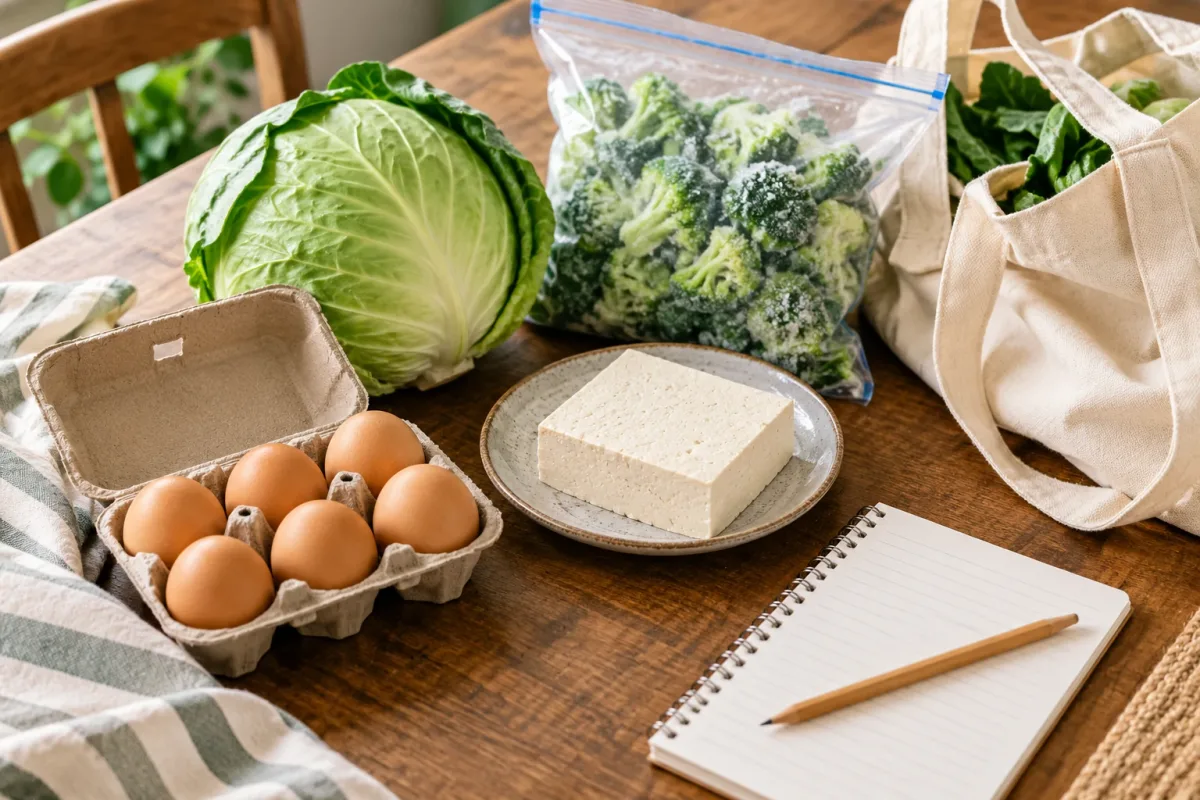
Write down two meals you enjoy and could realistically prepare. Then list their ingredients. Depending on preferences and suitability, examples to investigate might include eggs with vegetables, tofu with cabbage, or fish with a vegetable side.
These combinations are not individually calculated ketogenic menus. Amounts and the rest of the day still matter. If you need a prescribed plan, ask a registered dietitian rather than assume a shopping article can provide it.
Check your kitchen before shopping
Look for usable ingredients you already have. Compare them with the meals you selected, and buy only what is missing. USDA's budget guidance emphasizes planning meals around a food budget and shopping with a list.[1]
If an ingredient will be used only once, ask whether a familiar alternative could serve the same cooking purpose. A recipe is not automatically practical simply because it has a keto label.
Compare the useful cost
| Purchase decision | Question to ask |
|---|---|
| Large package | Will I use it safely before it is wasted? |
| Fresh or frozen vegetables | Which option suits my storage, preparation time, and local prices? |
| Protein food | What does the amount I will actually use cost? |
| Specialty snack | Does it solve a real need that an ordinary food cannot? |
| Recipe-specific ingredient | Can it be reused in other meals I enjoy? |
Use available unit prices, but also consider upfront cost and equipment. A large package may be economical per unit yet impractical if storage is limited.
Read the label before paying more
A product marketed as keto is not automatically nutritionally superior. The FDA explains that serving information provides the reference for interpreting calories and nutrients.[2] Compare the amount you expect to eat rather than the front-of-package impression.
Consider ingredients, relevant nutrients, allergies, taste, and price. A higher cost does not prove better suitability or faster weight loss.
Keep a flexible backup
Plan one meal that uses ingredients you can keep conveniently. That may reduce dependence on an expensive last-minute purchase. Choose the backup according to your actual cooking facilities and dietary needs.
If a week includes meals out, put them in the plan instead of shopping for dinners you will not prepare. A simple weekly plan and a short shopping list can help organize these decisions.
Do not solve a budget problem by eating inadequately
If the plan requires removing affordable staples without a workable replacement, reconsider it. Keto is optional. A less restrictive eating pattern may better fit your budget, culture, health, and household.
Food insecurity is not a weight-loss strategy. If money is insufficient for food, local assistance and support may be needed beyond shopping adjustments.
Frequently asked questions
Are keto bars and powders required?
This guide does not require them. Evaluate whether any product serves a useful purpose for you rather than assuming it is essential.
Can you give a guaranteed cheap weekly total?
No. Store prices, location, portions, and household needs differ. Build a list and compare actual local costs.
What if keto makes my grocery bill higher?
That is a valid reason to reconsider the approach. Discuss options that meet your needs without assuming the most restrictive plan is best.
About this article
General education for adults, based on the sources listed below. This article has not been medically reviewed.
This information is educational and is not a substitute for advice from your doctor or a registered dietitian. Read our health disclaimer and editorial policy. Spotted an error? Tell us.
Sources
Nutrition.gov (USDA) — Food Shopping and Meal Planning. Checked Oct 16, 2026.
FDA — How to Understand and Use the Nutrition Facts Label. Checked Oct 16, 2026.
Source links checked October 16, 2026. Numbered markers identify support for factual statements. Meal ideas, comparisons, and planning questions are original illustrative examples, not individualized menus or clinical trial results.